
Rebuilding vs. Remodeling After Wildfire Smoke: What’s Actually Worth Replacing?
Quick Summary / Key Takeaways
New Legislation: The 2026 Smoke Damage Recovery Act (AB 1795) now forces insurers to follow science-based health standards rather than just "sight and smell" tests.
Porous vs. Non-Porous: Hard surfaces (metal, glass) can usually be cleaned; porous materials (insulation, drywall, carpet) often hold toxic particulates forever.
The HVAC Trap: Cleaning vents isn't enough—smoke residue in the sealant and insulation of the ductwork often requires a full system replacement.
Invisible Dangers: VOCs and heavy metals from wildfire smoke can linger in "cleaned" drywall, leading to long-term health issues.
Project Leadership: PMS Remodeling works with industrial hygienists to ensure your "remodel" is actually a "rehabilitation" to a safe, pre-loss state.
In 2026, we no longer view wildfire smoke as just a "bad smell." Following the landmark AB 1795 (Smoke Damage Recovery Act), California has officially recognized that smoke damage is a public health crisis. If your Chico home was inundated with smoke, you are likely facing a tough choice: do you hire a cleaning crew to scrub the soot, or do you tear it down to the studs?
At PMS Remodeling, we've seen that the "cheap" fix often leads to "sick building syndrome" months later. Here is the 2026 reality of what is worth replacing versus what can be saved.
1. Drywall: The Giant Sponge
Drywall is incredibly porous. During a wildfire, it doesn't just "get dirty"; it absorbs volatile organic compounds (VOCs) and microscopic char.
When to Clean: If the smoke exposure was light and short-term (under 24 hours) with no visible soot.
When to Replace: If there is a lingering odor or visible "ghosting" (soot outlines on walls). In 2026, insurance standards are shifting toward replacement because scrubbing only cleans the surface, leaving toxins trapped inside the gypsum board.
2. Insulation: The Silent Filter
Your attic insulation acts as a giant air filter for your home. If smoke entered your attic, your insulation is now a reservoir of toxic ash.
The Verdict: Always Replace. There is no effective way to "clean" fiberglass or cellulose insulation. Leaving it in place ensures that every time the wind blows, particulates are pushed back into your living space.
3. HVAC Systems & Ductwork
This is the most common point of failure in smoke remediation. Many "restoration" companies will suggest a simple duct cleaning.
The Chico Reality: Most ductwork in Butte County uses flexible plastic or internally lined metal. Smoke particles embed themselves into the lining.
The 2026 Standard: Under AB 1795, if testing shows heavy metal or high VOC counts in the ducts, the entire system—including the furnace/AC coils—should be replaced to return the home to a "pre-loss" health state.
4. Windows & Seals
The Verdict: Clean the Glass, Replace the Seals. While the glass itself is non-porous, the rubber and silicone seals around your windows absorb smoke and can degrade from the heat/acidity of the ash. If the seals aren't replaced, the smell will persist forever.
The "AB 1795" Advantage for Homeowners
The Smoke Damage Recovery Act passed earlier this year has changed the game for Chico homeowners.
Science-First Testing: Insurers can no longer deny a claim just because they don't "see" soot. You are now entitled to chemical testing for heavy metals and toxins.
Habitability Protections: Your Additional Living Expense (ALE) benefits cannot be cut off until the home is cleared by a certified professional as safe for habitation.
Presumption of Damage: There is now a "rebuttable presumption" that if you are in a smoke exposure zone, the damage is real until the insurer proves otherwise.
Why "Restoration" Often Becomes a "Remodel"
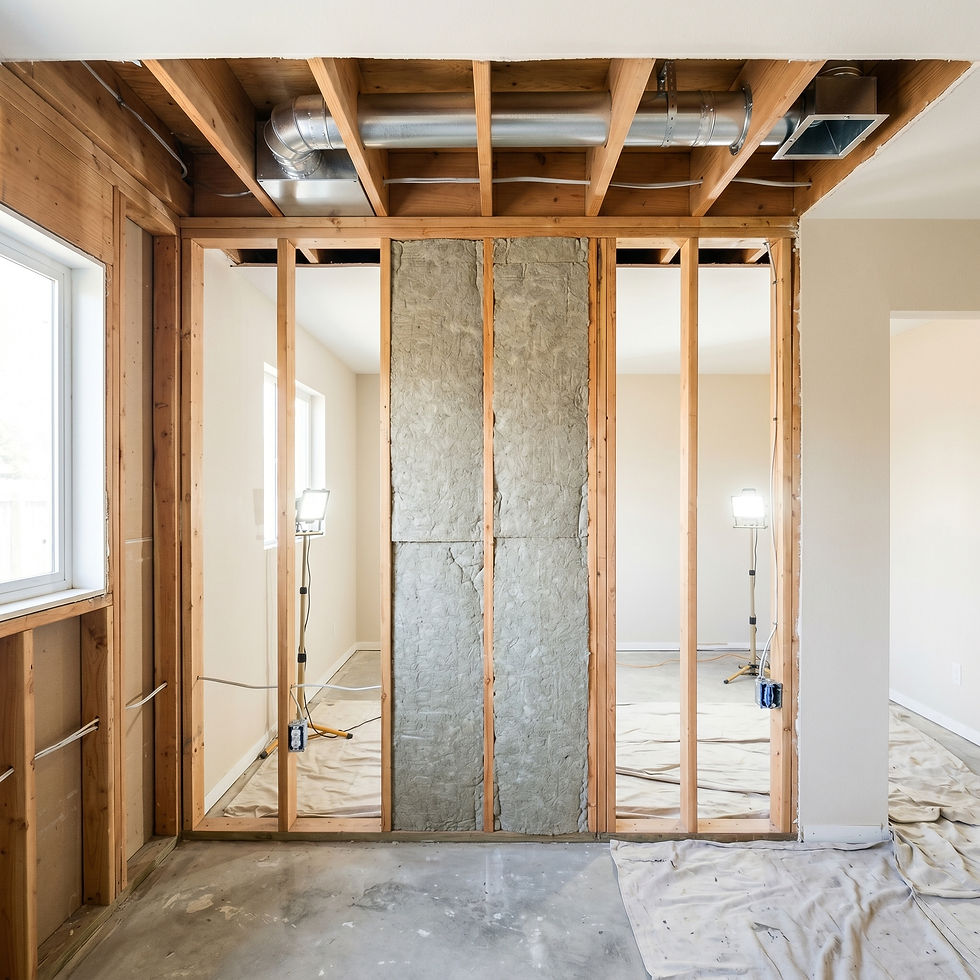
Many homeowners realize that if they have to tear out the drywall and insulation to fix the smoke damage, they might as well take the opportunity to remodel.
At PMS Remodeling, we help you navigate this transition. If your insurance is paying to "replace" smoke-damaged walls, that is the perfect time to:
Upgrade your insulation to 2026 energy-efficiency standards.
Install ember-resistant vents to prevent future smoke (and fire) entry.
Update your electrical while the walls are open, saving thousands in labor later.
Frequently Asked Questions
Is smoke residue toxic to breathe long-term?
Yes. Wildfire smoke contains a cocktail of burned plastics, chemicals, and heavy metals. Long-term exposure to these "invisible" residues can lead to respiratory issues and neurological concerns, which is why AB 1795 was enacted.
Does insurance cover replacing carpet after wildfire smoke?
In 2026, if a certified industrial hygienist finds that the carpet contains particulates that cannot be removed by standard cleaning, the insurer is generally required to pay for replacement to restore the home to its "pre-loss condition."
What is the Smoke Damage Recovery Act (AB 1795)?
It is a 2026 California law that establishes statewide standards for smoke testing and remediation, ensuring homeowners aren't forced back into unsafe homes by insurance companies using outdated "sight and smell" criteria.
Can wildfire smoke stay in drywall?
Absolutely. Drywall is porous and acts as a reservoir for odors and VOCs. In cases of heavy smoke inundation, painting over it (even with odor-sealing primer) is often only a temporary fix.
Rebuild for Health, Not Just Aesthetics
A smoke-damaged home isn't just an eyesore; it's a health risk. Choosing to replace rather than just "clean" is an investment in your family's future.
Contact PMS Remodeling today. We can help you navigate the 2026 standards and ensure your home is rebuilt correctly, safely, and beautifully.


Comments